pyOpenSci makes Python software better and easier to find through peer review
Our open peer review process makes scientific software better and easier to discover.

pyOpenSci is growing, and we need volunteer editors to keep supporting scientists building open source software. Editors oversee reviews, find reviewers, and help authors through the process — mentorship is available if you are new to the role.
Apply to join the editorial board or read the Editor Guide.
How Python software peer review works
Software peer review, similar to the review of scientific papers, is a process where scientists vet software code, documentation, and infrastructure. pyOpenSci leads an open peer review process run by a community of dedicated volunteers. Reviews are supportive and fully transparent with the shared goal of improving the quality, usability, and maintainability of the software that is driving open science.
Diverse teams lead each review, enhancing the overall feedback quality.

Learn about the peer review timeline and roles
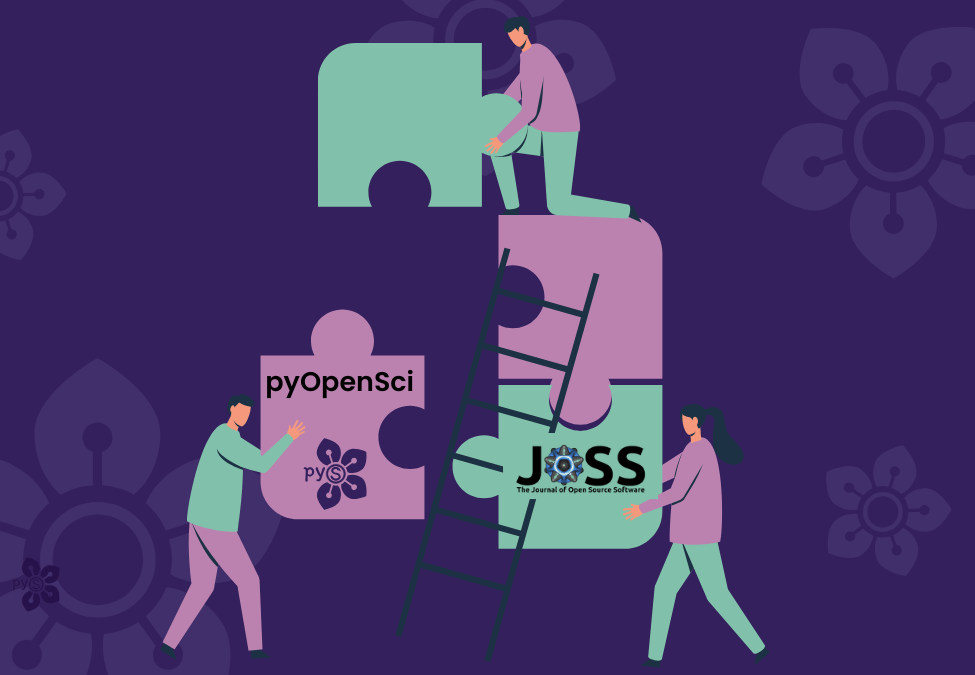
Learn more about our JOSS partnership
Scientists need trusted and vetted software
Through our partnerships with domain-specific communities, our catalog of trusted tools for scientists across domains continues to grow.

Peer review benefits open source maintainers
The pyOpenSci peer review process multiplies shared knowledge, making it easier for Pythonistas of all levels to accomplish challenging tasks, such as navigating the Python packaging ecosystem. Our diverse community supports scientific package maintainers in their efforts to develop and build robust software.

Get involved with software peer review
<div class="card-shortcode__icon">

    <i class="fa-solid fa-user-pen" aria-hidden="true"></i>

</div>


<h3>Become a pyOpenSci reviewer</h3>

<div>
  <p>We could use your help! Fill out our reviewer form. We will contact you if we
have a package that needs reviewers. It is OK if you have never reviewed a package before — we will walk you through it.
Sign up now (Google Form)
</div>
<div class="card-shortcode__icon">

    <i class="fa-brands fa-github" aria-hidden="true"></i>

</div>


<h3>See our review process in action</h3>

<div>
  <p>Our software review process is run using GitHub issues. Anyone can check in on
any part of any review and read the full conversation.
See open reviews
</div>
  <div class="single-card-wide__icon">

      <i class="fa-solid fa-rocket" aria-hidden="true"></i>

  </div>


<h3>Ready to submit a package for review?</h3>

<div class="single-card-wide__body">
To submit a package, open an issue in our peer review GitHub repository. Learn about the steps in our guidebook or on our submit a package page.
<a href="/how-to-submit-a-package-to-pyopensci/" class=“btn btn–dark-purple”
How to submit a package
</div>
</div>
Meet our editorial board
The pyOpenSci software peer review process is led by a volunteer team of editors from the scientific Python community. Editors find reviewers from diverse backgrounds, oversee each review, support authors and reviewers, and decide whether a package is accepted into the pyOpenSci ecosystem.

Filipe


Lauren Yee

David Nicholson




Bane Sullivan

Derek Homeier

Tetsuo Koyama


Julieta Millan

Carter Lee Rhea

Emeritus & guest editors
We are deeply grateful for those who served on our editorial board previously!


Chiara Marmo

Luiz Irber

Ben Cook


Alex Batisse

Jonny Saunders


Nima Sarajpoor


Anita Graser
Recently accepted Python packages
PyAutoGalaxy
Astronomy software for analysing the morphologies and structures of galaxies
Plenoptic
a python library for model-based synthesis of perceptual stimuli
Community partners
Domain-specific communities can partner with pyOpenSci to leverage our peer review process and Python packaging guidelines — without building a separate review program from scratch.
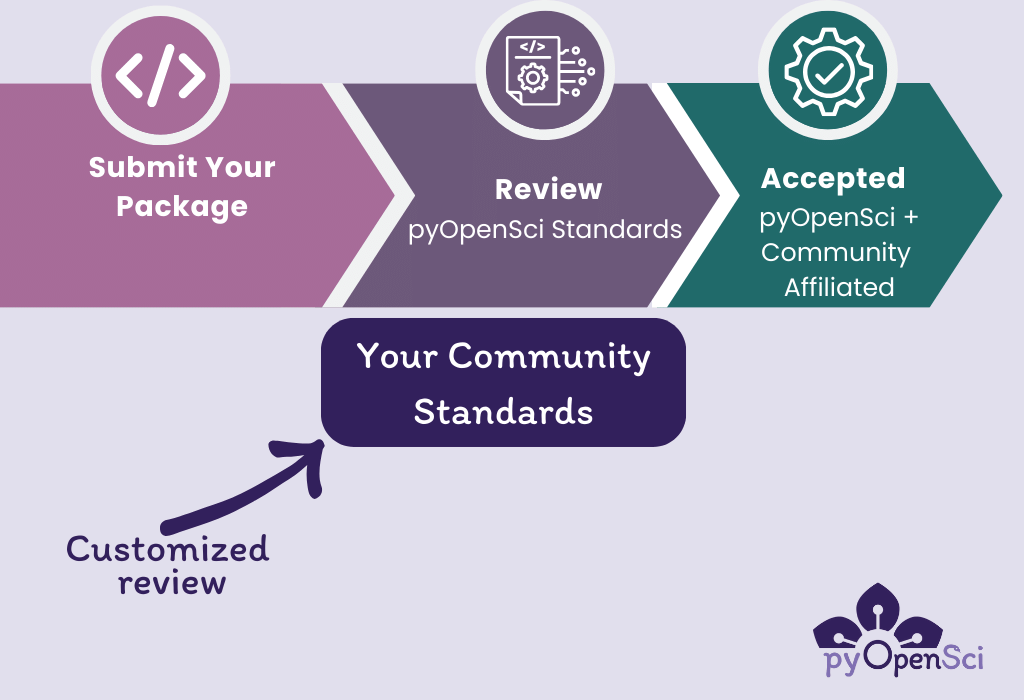
Learn how community partnerships work
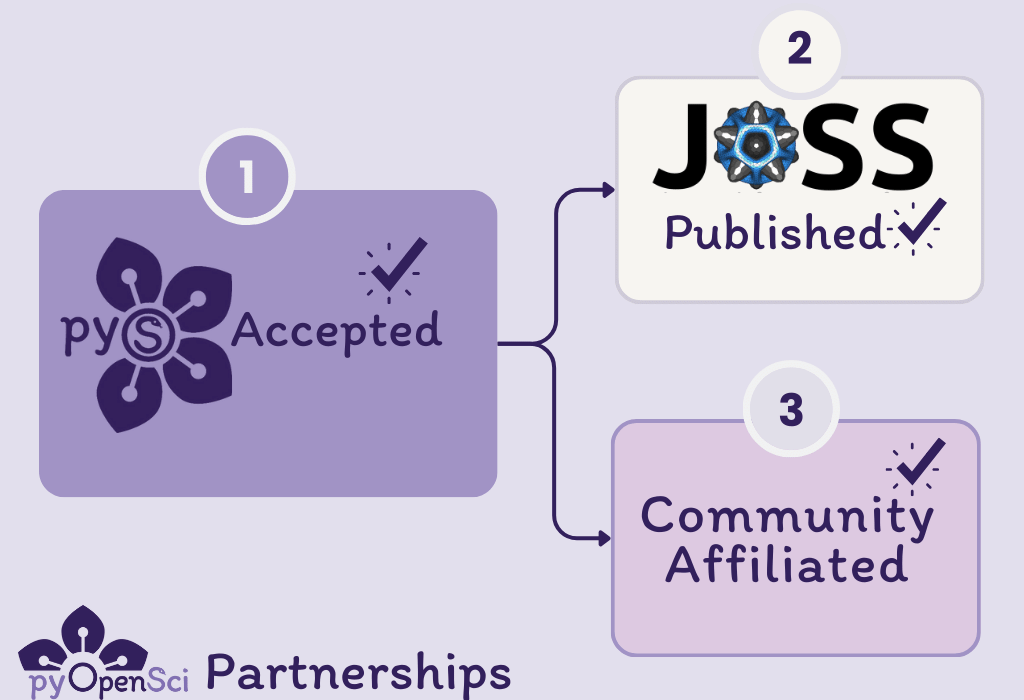
Through a single review process, community maintainers can have their package accepted into the pyOpenSci ecosystem, published in JOSS (if in scope), and affiliated with your community following your guidelines.
Partnering with pyOpenSci increases visibility for your community’s tools
We will:
- Promote your community and its packages on our website.
- Post about affiliated packages on our social media channels.
- List packages on our packages page.
- Provide a feed allowing you to cross-list affiliated packages on your website.
- Keep in touch with maintainers to ensure packages are actively maintained.
Leverage our peer review process
Your domain-specific community can use our documented peer review process, including:
- A growing team of editors from diverse scientific and technical backgrounds. Partner communities typically have at least two members on our editorial team.
- Community reviewers whose expertise spans numerous scientific domains.
- Community-driven packaging resources that drive the peer review process.

Partnering with pyOpenSci connects you to packaging experts, open science enthusiasts, and Pythonistas who can help with maintenance transitions when needed.
Explore our community contributors